
“The first is as described by The Bulletin newspaper in 1906: A covering made by sewing together three or four unopened chaff or corn sacks, with a bag needle and twine – made and used by men such as shearers, drovers, rabbiters, etc – in the outdoors” – Diana Mary Eva Thomas, The Wagga Quilt in history and literature.
WHEN: UNTIL 2 NOV
WHERE: NATIONAL WOOL MUSEUM
Keep up to date with all things arts, exhibitions and stage here.
View this post on Instagram
“…use refers to the length of time being used. And time is related to power: the most time something is used, the more power it acquires; the less time something is used, the less power it retains. Power is time in proportion. To make use of a part is to take time: use as strengthening and preserving; disuse as weakening and withering,” Grenville, The Idea of Perfection.
Historically a space driving the education and history of Australia’s fleece industry and the role our region played across the last 200 years, the National Wool Museum has moved beyond the machinery, beyond the factory floor and engineering advancements, and into the purpose of the product.
Partnering with RMIT University, The National Wool Museum presents Quilts, Wool, Use: you were not completely in, but you were not exactly out either.
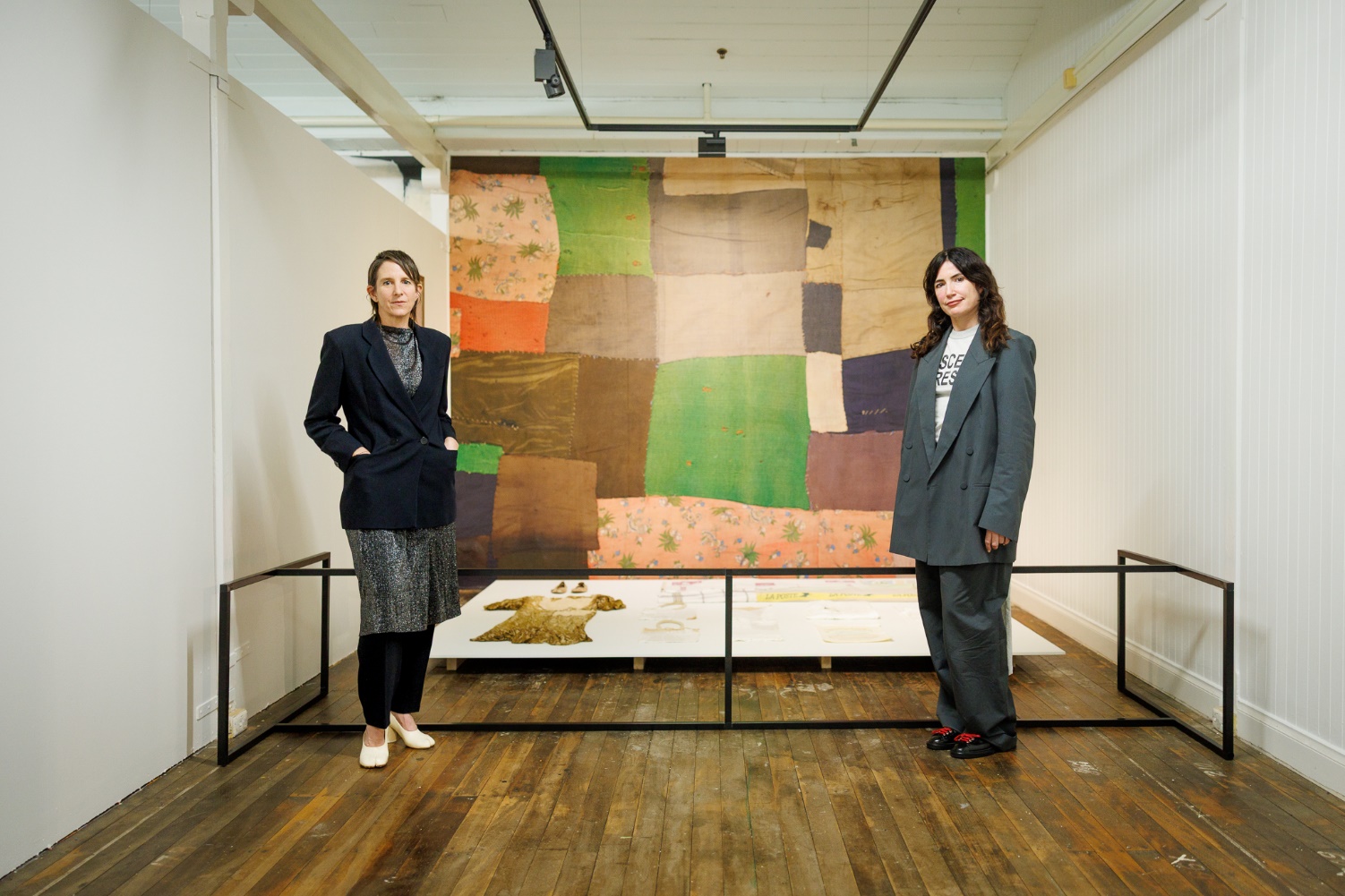
In their first site responsive, academic-led exhibition, artists and RMIT University, School of Fashion and Textiles practice-based researchers, Associate Professor Ricarda Bigolin and Lecturer Chantal Kirby (D and K), go deep into the linen closet to recover the lost repurposed fleece fabric creation, the Wagga quilt.
A lesson in sustainability and a once essential purpose-driven item, the Wagga is the product of a period in history where materials were treated with care and sewing was a non-negotiable life skill. The Wagga, said to have originated from the Wagga Lily flour sacks made by the Murrumbidgee Co-operative Flour Mill in Wagga Wagga, are quilts made from recycled materials during Australia’s settler, wartime, and Depression eras. Made from multiple layers of jute (burlap) bags sewn together or calico sacks, recycled clothes, fabric scraps and old blankets, the wagga was once a traditional item made for practicality and purpose. The earliest known waggas were made in the 1890s and they continued to be made into the 1950s.
View this post on Instagram
With the National Wool Museum housing one of the largest and most significant public collections of quilts and waggas with an archive comprising 25 waggas, Quilts, Wool, Use reimagines the utilitarian quilt through a modern lens through garments, films, performance and picture.
“The exhibition is a response to the nationally significant collection of Wagga quilts and wool ephemera with the National Wool Museums collection. Two parallel timelines emerge in overlaying the evolution of the Wagga quilt into four distinct taxonomies during precarious times of settlement, during and between war periods, and notably made by marginal makers. They are part of many stories on quilts across places and times in the world made to circumvent social and political realities, as text, comfort in discomfort, varying states of materials, forgotten, personal, worn, excess and salvaged.”
Taking over the top level of the Brougham Street bluestone building, Quilt, Wool, Use sees Bigolin and Kirby consider the artistry, the sustainability, the social history and the fashionability of the wagga. Placed upon raised floor plinths and roped off like farm fencing, the displays of waggas range from the traditional archival pieces, including the controversially titled ‘World’s Worst Wagga’, which received its title for its aesthetically displeasing colour combination, but represents the exact essence of the recycled object, to modern day fashion items that are deemed end of life or obsolete through trend standards. A red rib sweater, a hand knit jumper, a beige cardigan all become waggas with their placement on the plinths tying the fabrics together to make their own plinth. Literature, digital photography of archival pieces, stunning gowns, including one entirely made from wool, all add to the collection.


From the wagga origins of the textile of abundance, the corn flour bag to the modern counterpart of the tote bag, Quilt, Wool, Use is a reflective exhibition begging for commentary on fashion as memory, critique, and cultural legacy. It asks audiences to explore how materials carry histories and challenge how fashion is made and valued today whilst also placing power on the wagga as symbols of resilience, memory, and working-class women’s untold stories.
The exhibition represents an exciting step for The National Wool Museum as they begin integrating textiles and fashion into their programming. Led by Senior Curator Josephine Rout, the National Wool Museum is also currently displaying the Sustainable Fashion Prize as part of the We The Makers Exhibition Series.
Quilt, Wool, Use is on display at the National Wool Museum until 2 November 2025.
Find out more about the ambitious exhibition at the National Wool Museum here.
The current most read stories on Forte

3 June 2026
Her Majesty’s Theatre Ballarat is alive with performances this June, offering comedy, theatre, and music that span intimate storytelling to…
3 June 2026
Cindy Tong has been on our radar for a while. The ceramic artist and potter from Gippsland has developed a…
2 June 2026
This winter, Chadstone is stepping beyond the shopping bag and into the spotlight, unveiling Light to Night, a month-long festival…
2 June 2026
Today, Melbourne’s trams take on a new life, gliding through the city as moving works of art. The First Peoples…
1 June 2026
I’m back in the saddle again. Well, perhaps not a saddle. That would require a certain level of poise, grace…
29 May 2026
Winter on the Bellarine has always carried a certain romance. Salt-heavy air curling off the bay. The skeletal beauty of…
22 May 2026
Geelong-based photographer Jane Fitzgerald invites viewers to step into a world that lies just beyond the visible with Unseen, her…
22 May 2026
If festivals had a playbook, the National Celtic Folk Festival would have written it. A celebration of music, arts, lifestyle,…