
Furniture making and woodwork are not just about making practical items for the home. The precision, the skill, and the craftmanship of making carving a former tree into a household treasure is no simple task, especially when employing ancient Chinese techniques. Ocean Groves Jake Lunniss knows this well.
In our series, In The Studio, we take you into space of Victorian creators, unpacking their craft and getting comfortable in their creative zones. Join us as we enter the studio with Jake Lunniss.
Keep up to date with all things arts, exhibitions and stage here.
What is your arts practice and style of making?
I build Classical Chinese inspired furniture – forms and joinery perfected during the Ming dynasty, made in Aussie hardwoods instead of the rosewood the original makers used. Theirs are joints crafted so perfectly that pieces built six centuries ago are still standing without glue or nails, and I’m attempting to translate that tradition into contemporary Australia, and combine it with marquetry – hand-cut pictorial inlay using natural timber veneers.
How long have you been developing your arts practice?
About five years. I spent a decade in IT growing fat, pale and decrepit in front of a screen, and a confluence of events came together to make this possible. Covid tanked my IT business, my wife asked for a bookcase, and I stumbled across a book called “The Anarchist’s Tool Chest” that set my life on the path it’s on now.
View this post on Instagram
How did you discover your passion for this practice?
The first time a chisel bit into wood it became an obsession, not a passion. I would lie awake at night planning the next day’s steps, and that hasn’t stopped. Woodworking engages every sense. It’s like an orthodox liturgy: the sound of a blade slicing through wood, the tactile feedback, the aroma of Huon Pine, the cerebral requirements no less than any academic pursuit.
The Chinese furniture came by accident. A customer gave me the vaguest possible brief – “a coffee table… in wood…” – and she had an eclectic mix, so off-hand I suggested an eastern inspired piece. She said yes, and I went looking at Japanese furniture and found nothing I liked. Then I stumbled across a Chinese piece and there was no looking back. The Ming masters really were the absolute pinnacle of wood craftsmen (sadly, they really were all men), and the absolute precision their joinery demands stimulates my finicky engineer brain; the graceful forms satisfies my arty brain. Up until that point I’d been forced to choose one or the other.
What have been the biggest milestones in your arts career to date?
I don’t really think of things in milestones, like lurching from one level to the next in a video game. It’s been a steady, gradual, incremental improvement. Early on someone told me the only thing I’d need to survive is endurance. But a major turning point, professionally and personally, was being introduced to Karen from The Hive Gallery. She has been a tremendous source of encouragement, direction, gentle correction and friendship. Had that introduction not happened my life would look quite different, I’m sure.
What is your favourite artwork or series that you have created and why?
Usually the piece I’m most pleased with is the most recent one, because with each new piece I do something new and push my skills further. The àn tables I just completed are technically demanding and really pushed my hand skills beyond their limit, and they’re lovely little tables I’m delighted to have made. The legs insert into something called a spandrel and the spandrel inserts into an apron with two mitred corners. Because the legs are at a 1.5 degree angle, that means the two mitres are exactly 44.25 and 45.75 degrees — and all four spandrels have to be EXACTLY the same or the whole thing won’t go together. But they do go together and hold snugly without glue. I didn’t know I was capable of this kind of precision until the form forced me to be. They’ll be on display at The Hive Gallery in Ocean Grove this June.
What has been the biggest challenge you face as an artist and how are you pushing through that barrier (if you can!)?
I’ll admit that I’m part of the problem: I always make things in the best way I know how, rather than the fastest – which is to say, the most profitable – way to make them. But making enough money to live while building up a capital and time intensive practise, something I’m still doing, has been extremely challenging. And having biennial babies doesn’t help matters. But I started with one desire: I make it the best way I know how. If money was what mattered I could’ve been a banker.
Where has your work been, or is your work currently, displayed?
I’ve had pieces on display at The Hive Gallery in Ocean Grove continually since 2021 – Karen has been very generous with the free storage! In June last year we had our first joint timber exhibition, and I’m honoured to be part of it again this year. Beyond that, most of my work is in people’s homes. Commission furniture goes to the person who asked for it, and that’s where it stays, being used, accumulating the scratches and patina that prove it’s doing its job.
View this post on Instagram
Plenty of people have asked me why I do this, especially the way I do it. It’s extremely hard to answer. There’s the D.H. Lawrence poem where he talks about the transferred touch of the maker, and that’s a part of it: I’m reaching forward through the coming centuries. But I think mainly it’s because I get tremendous satisfaction from helping make people’s homes more beautiful. When I’m feeling childish I tell people that my chairs are “art you can fart on.” When I’m being a grown up I call it “a beautiful utility”.
Tell us about your studio space!
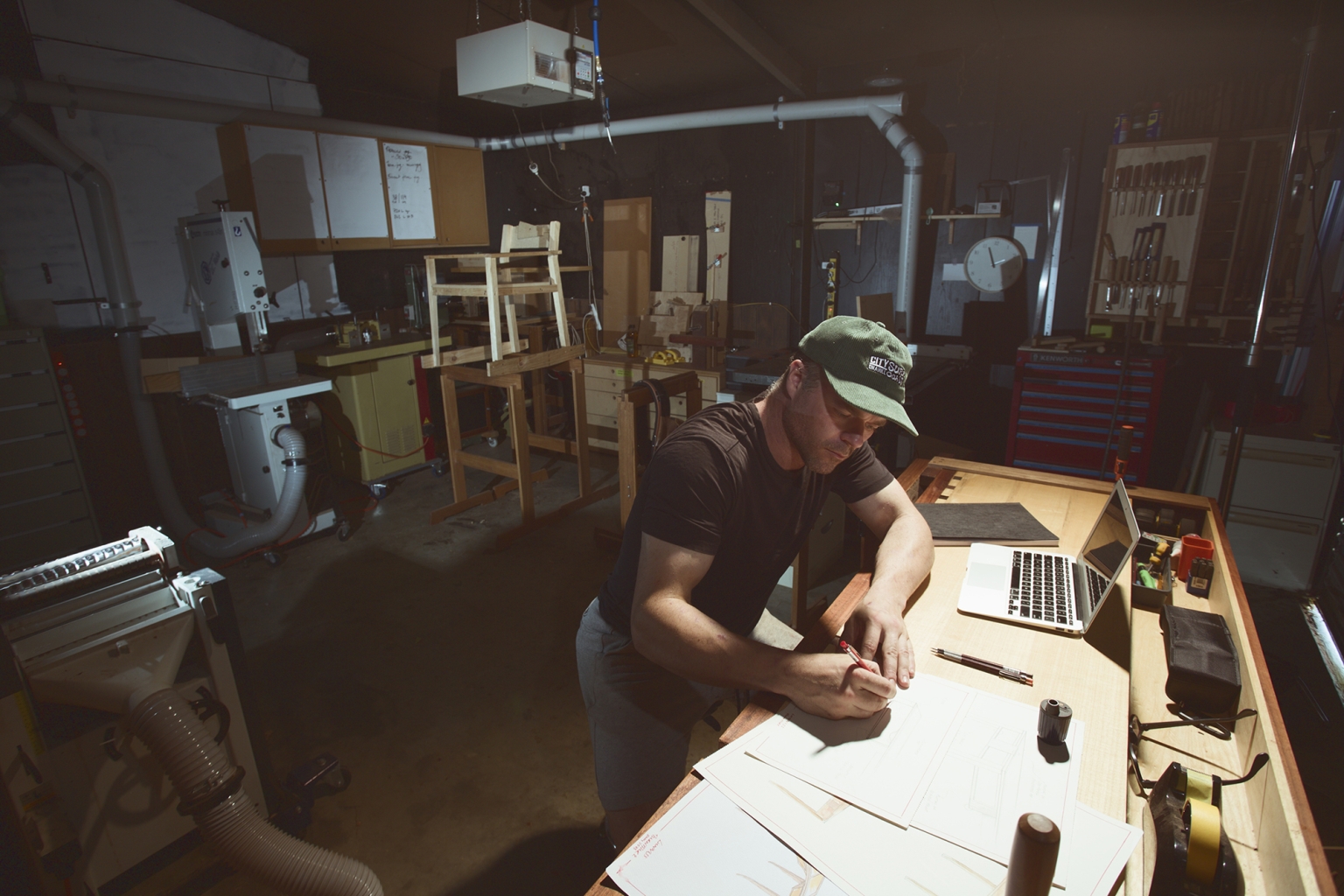
It’s perhaps a reverse inspiration – if I work hard maybe I’ll be able to afford a bigger space one day! It’s a 25m² tin shed with no windows. A peer, who is the proud owner of a workshop the size of an aircraft hangar, visited and said “‘streuth, I couldn’t make breakfast in here.” I think he was impressed.
Woodworking studios aren’t like a painter’s nook overlooking green pastures and a babbling creek. They’re dirty, dusty, littered with trip hazards and crowded with patient meat-eaters that will take a hand off with a moment’s inattentiveness. Mine is stuffed with tools and jigs and templates. There’s enough room for the furniture I’m making. Sometimes there’s even room for me, too.
What does a typical day of creating art look like for you both in the studio and out of the studio?
I suspect you’re looking for an artist’s routine type answer — “every day I wake at midday and do my morning pages and pray to the muse and drink mescaline to unlock my creative flow.” I love reading that stuff. But I have three children under five, so there’s no such thing as a typical day. No such thing as “my time.” I carve it out when I can and have to be flexible, and diligently organised.
Daily it depends where I’m at in the cycle. If I’ve just received a brief I’ll be in the drawing room (the spare bedroom) a lot – I hand-draw all my designs (of course I do) and I have a decent drafting setup. I usually do this when the kids are in bed. I’m teaching a class this weekend so I’ve been drawing an accompanying workbook. I just cleaned up the workshop after finishing the àn tables and rearranged a few things. I’ll be back onto a desk commission tomorrow which means ear protection, dust mask and tablesawing for the most part. The handwork comes later.
How would you characterise the arts ecosystem in regional Victoria?
I honestly haven’t much of a clue about the broader picture. I have my head down in my own work and don’t have much idea what’s happening in the wider art world. I don’t even know what my kids are up to under my own nose half the time. What I can say is that the community orbiting The Hive Gallery in Ocean Grove is full of serious, generous people making stunning work and who have welcomed me with open arms. That’s the ecosystem I know, and it’s been a privilege to be included in that.
How has being based in regional Victoria elevated your arts practice?
If I lived in Melbourne it’s unlikely the place I’d be living in would have the capacity for a workshop, so from that point of view if I wasn’t regional I wouldn’t be woodworking the way I am. I’m not in the gallery circuit, I’m in one local gallery run by a woman I trust and love. It just happens to be the best regional gallery in Victoria! Lucky me! In terms of formal support from the state or region, I honestly don’t know what’s available. I’d love to be educated on that!
What does 2026 look like for you as a creator?
The group show at The Hive is the big one – I’ll be showing the àn tables alongside Chinese joinery samples that let people see and handle the engineering inside the work. Beyond that, I’m teaching woodworking classes, writing a web series for Australian Wood Review, and publishing a weekly newsletter called *The Heavy Life* where I document the whole practice as it happens.
Where can we find you?
I’m not on any social media, you can find me in my workshop. But you can follow my work at jakelunniss.com and see my portfolio at lunnissfurniture.com.au.

The current most read stories on Forte


29 June 2026
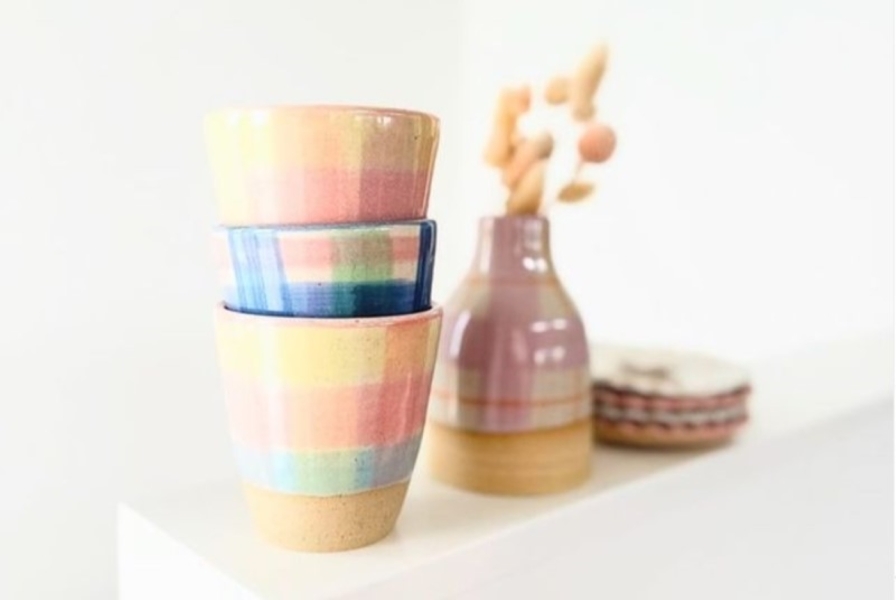
Save the date: over the weekend Geelong City Market and Geelong Ceramics Market have announced the ultimate crossover event. On…
24 June 2026
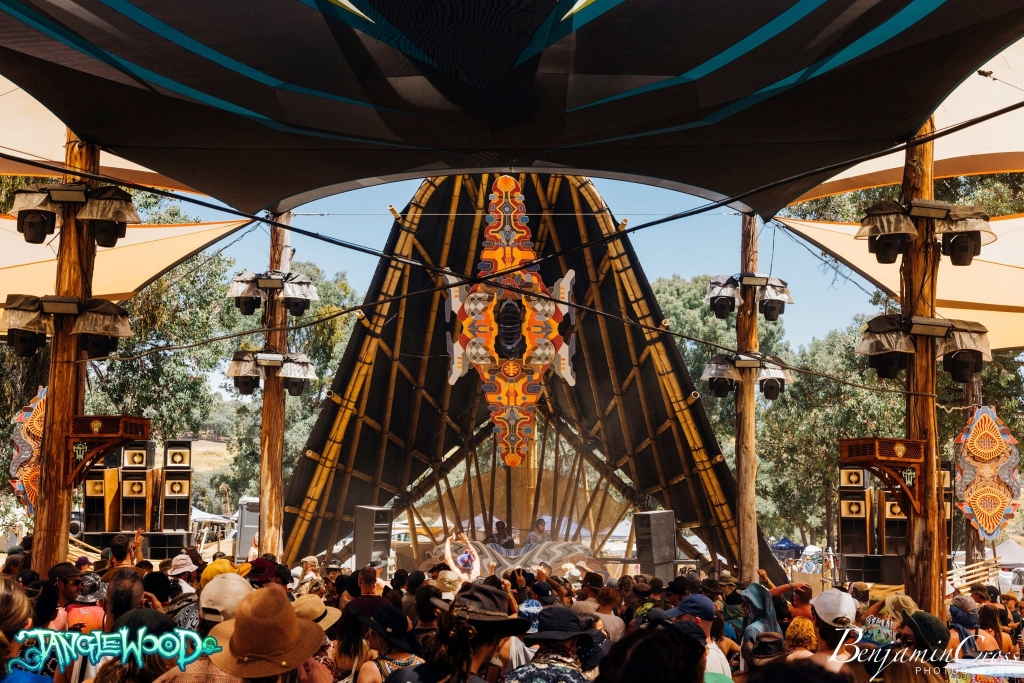
Are you a DJ, band, solo act, live act or producer looking for playing plans this New Years period? Tanglewood…

15 June 2026
She is more interested in what happens behind the scenes. The pivots, the burnout, the breakthroughs and the uncomfortable in-between…

11 June 2026
June at Geelong Arts Centre arrives like a current of stories and sound, carrying audiences from intimate confessions to thunderous…

11 June 2026
These school holidays, State Library Victoria is transforming into a playground of imagination, where cardboard cars become tickets to adventure…
9 June 2026
Local galleries are turning heads, presenting works worthy of the Louvre Museum from international showcases, national prizes, to Australian exclusive…

9 June 2026
This July, Civic Hall in Ballarat will transform into a space where air and imagination converge. From 10 to 12…

3 June 2026
Her Majesty’s Theatre Ballarat is alive with performances this June, offering comedy, theatre, and music that span intimate storytelling to…