
The opening of the Nyaal Banyul Geelong Convention and Event Centre marks a decisive shift in the cultural and events landscape of regional Victoria, establishing Geelong not as an alternative to Melbourne, but as a destination in its own right.
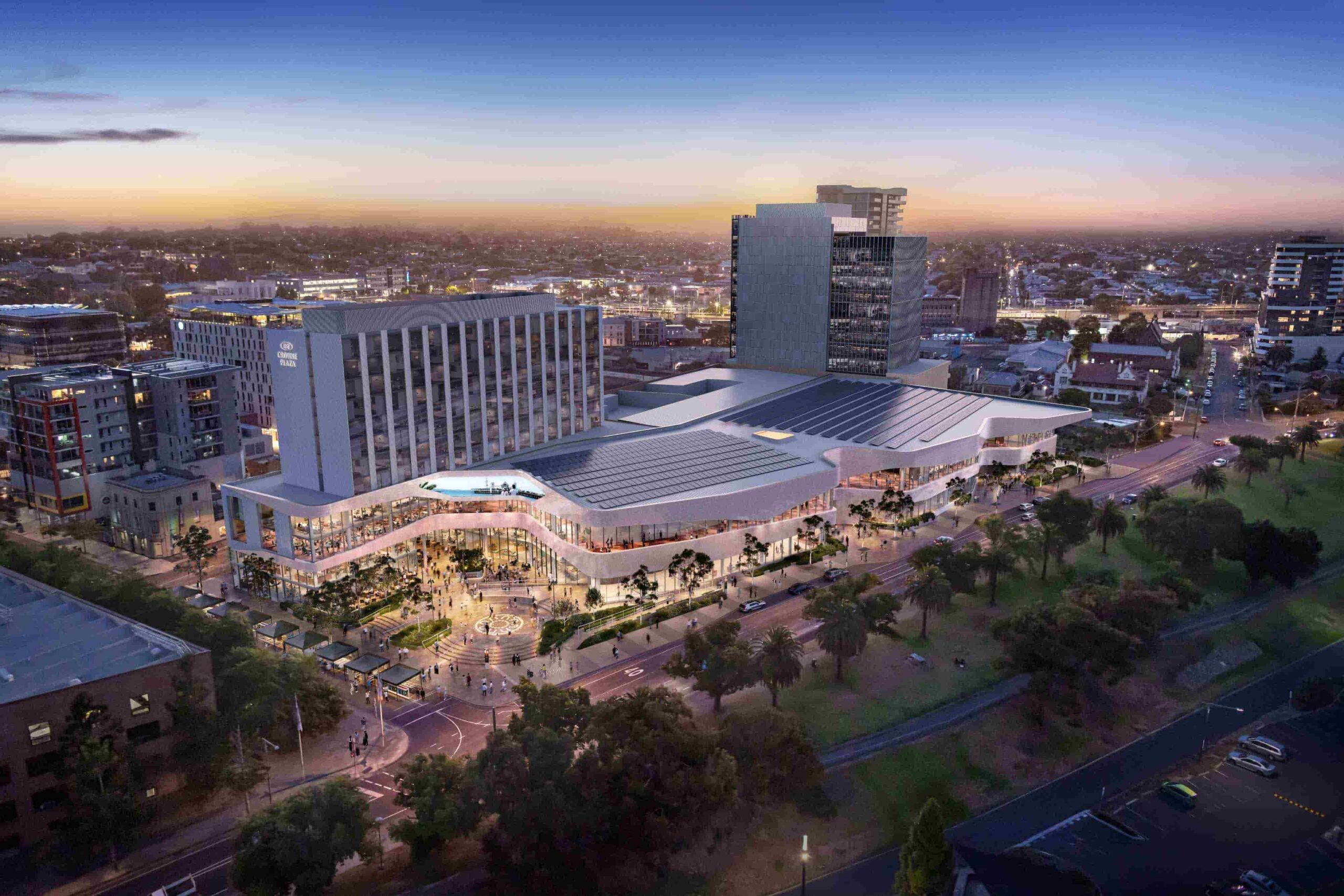
Officially opened by Deputy Prime Minister Richard Marles and Premier Jacinta Allan, the venue arrives with a sense of scale and intention that is immediately felt on entry. This is not simply an events space, but a waterfront precinct designed to hold the weight of national and international programming, while remaining grounded in the rhythm of its coastal city.
Stay up to date with what’s happening in and around the region here.
View this post on Instagram
At its centre is the 1,000-seat Wala Mirr Theatre, a purpose-built performance space conceived for live music, comedy, screenings and touring productions. The room carries a deliberate duality, intimate in feel yet capable of carrying the energy of large-scale performance. Acoustics are tuned for clarity rather than excess, lighting systems are adaptable, and backstage infrastructure has been shaped with production flow in mind. It is a space built to disappear when it needs to, allowing the performance to take focus.
Beyond the theatre, the venue expands into a network of exhibition spaces, meeting rooms and flexible event areas designed to shift between large conferences and more contained, focused gatherings. The Delama Event Spaces extend this adaptability further, able to combine into a larger format or operate independently, accommodating everything from cultural showcases to immersive entertainment experiences. Rather than imposing a single way of working, the building responds to the shape of each event.
The broader precinct situates the venue firmly within Geelong’s evolving waterfront identity. Gheringhap Plaza adds a public-facing dimension to the site, while the adjoining 200-room Crowne Plaza positions the centre as a fully integrated destination for visiting delegates, touring artists and audiences staying beyond a single night. The intention is clear: to encourage time spent in the city, not simply movement through it.
Before the doors fully open to its first wave of conferences and performances, the venue will also host a Free Community Open Day on Saturday 11 July, running from 10am to 4pm. It offers the public a rare early glimpse into the precinct in motion, with self-guided tours through the theatre and event spaces, live entertainment across the site, and a spread of local food and drink that reflects the region’s producers and makers. Designed as both introduction and invitation, the day also features face painting, family-friendly activities and school holiday programming, positioning the venue as something to be explored rather than simply observed. Guests are encouraged to register for the event, with the added incentive of going into the draw to win one of five hampers showcasing local suppliers.
View this post on Instagram
From July, the centre begins hosting events in earnest, with around 80 conferences and bookings already confirmed. The ambition extends beyond capacity alone. The venue has been positioned to draw national and international attention, creating a flow of visitation that supports local hospitality, retail and cultural activity across the wider region. For Geelong, the impact is designed to ripple outward rather than concentrate inward.
That ripple is already visible in employment and industry engagement. More than 240 ongoing roles will be created within the venue, supported by over 50 local businesses supplying food, wine, production equipment and event services. During construction, the project generated approximately 1,400 jobs, including the contribution of 250 apprentices who collectively completed more than 150,000 hours of training. The scale of that investment reflects not only the physical building, but the skills pipeline embedded within it.
The design process itself was undertaken in collaboration with the Wadawurrung Traditional Owners Aboriginal Corporation, ensuring cultural context is embedded within the fabric of the precinct. This grounding in Country is not presented as an overlay, but as part of the venue’s foundational logic, shaping how space, movement and gathering have been considered.
Funding for the $449 million project was delivered through a combination of $416 million from the Victorian Government, $30 million from the Federal Government and $3 million from the City of Greater Geelong. It is a public investment with a distinctly civic ambition, one that frames the venue as infrastructure for culture as much as commerce.
Yet what distinguishes Nyaal Banyul most clearly is its positioning as a destination for live performance on the water. The Geelong waterfront setting is not incidental. It actively reframes the experience of attending a show or event. Arriving at a concert, comedy performance or touring production here carries a different texture, shaped by proximity to the bay, the ease of the precinct and the sense of departure from routine urban venues.
For organisers, the appeal lies in that combination of technical readiness and setting. The venue has been designed specifically for live entertainment, with integrated audiovisual systems, adaptable rigging and in-house technical teams who understand the cadence of production from bump-in to final curtain. The intention is to reduce friction, allowing creative teams to focus on delivery rather than logistics.
Hospitality has been treated with similar seriousness. Food and beverage offerings draw on seasonal produce from Geelong, the Bellarine and broader Victorian regions, extending from artist catering and green room service through to pre-show dining and delegate experiences. It is an approach that treats hospitality as part of the event architecture rather than an adjunct to it.
Geelong itself plays a critical role in the venue’s proposition. Located roughly an hour from Melbourne, the city offers a combination of coastal ease and growing cultural density, with an expanding food and arts scene and increasing accommodation capacity. For visiting audiences, a ticket becomes less transactional and more experiential, often extending into overnight stays or weekend itineraries. That shift carries economic weight, reinforcing the venue’s broader impact on regional visitation patterns.
For entertainment and touring markets, the venue offers something increasingly sought after: a contemporary, coastal performance environment that balances scale with intimacy. Whether hosting major touring productions, stand-up comedy, live music or cultural programming, the infrastructure has been shaped to support versatility without compromising experience.
As the calendar fills and the first wave of events begins, Nyaal Banyul positions itself less as a single building and more as a civic threshold, where Geelong’s waterfront, its audiences and its creative industries meet in new configuration.
Find out more about Nyaal Banyal Geelong Convention and Events Centre here.
The current most read stories on Forte


23 June 2026
Back on the weekend of Saturday 4 and Sunday 5 July, the festival invites families, friends, and anyone with a…

16 June 2026
First Nations Australians are the world’s original astronomers and storytellers, chronicling celestial events that predate written history. Their knowledge of…
11 June 2026
As Geelong prepares for a new era of business events with the upcoming opening of Nyaal Banyul Geelong Convention and…
1 June 2026
I’m back in the saddle again. Well, perhaps not a saddle. That would require a certain level of poise, grace…
29 May 2026
Winter on the Bellarine has always carried a certain romance. Salt-heavy air curling off the bay. The skeletal beauty of…

27 May 2026
Launching this weekend, award-winning immersive studio White Spark Pictures is bringing its groundbreaking Virtual Reality Cinema season to Village Cinemas…
22 May 2026
If festivals had a playbook, the National Celtic Folk Festival would have written it. A celebration of music, arts, lifestyle,…
21 May 2026
It’s hard to believe that it’s only been one year since Ryrie Street entertainment hub and bar Here and Now…